

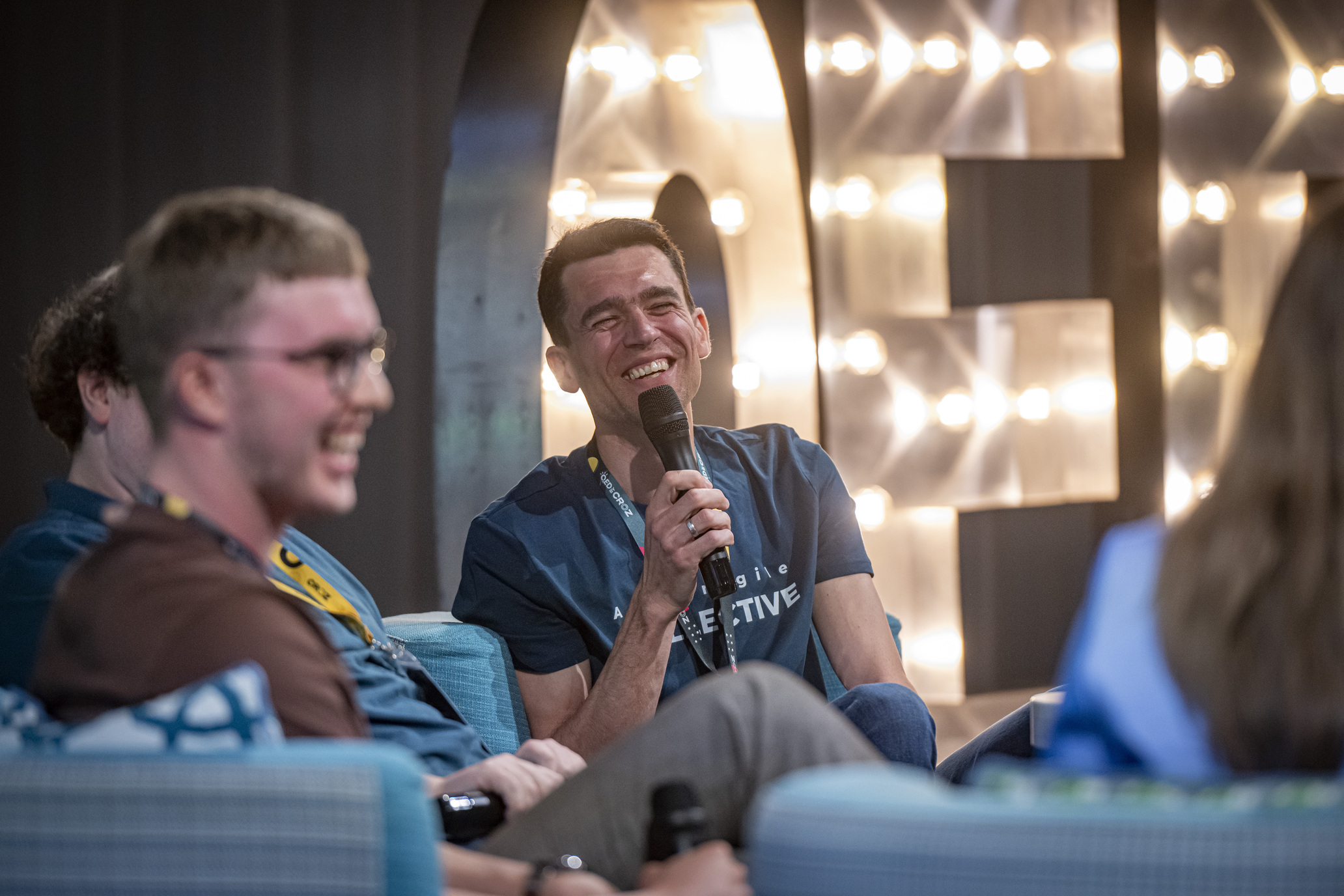
QED doesn’t end when the final session does.
Even months later, we still find ourselves coming back to certain ideas. We bring the conversations into our teams. And we notice how some of what we learned is already shaping the way we think about the next edition.
Looking back at QED 2026, five reflections stood out.
1. AI is only as transformative as the people using it
One of the most thought-provoking discussions came from Boris Jokić and Boris Šurija. They made it clear that AI can become a true revolution, for example in education.
Or it can simply end up confined to a small box, reinforcing the existing systems we already have. The technology itself won’t make the difference. People will.
2. One keynote can attract people, but one idea can stay with you
Nassim Taleb reminded us that resilience isn’t built by avoiding stress, but by embracing the right kind of it. Small, repeated stressors are what make people, teams, and organizations stronger.
Jumping from a one-meter wall is like jumping from a one-meter wall, not a hundred-meter cliff. One of those simple metaphors stayed with many of us long after the conference ended.
3. The Lindy Effect of great conferences
Twenty years ago, the winning formula was the same as it is today. In the age of AI, it still works. Bring together technology, business, leadership, psychology, economics, and human stories.
Trends come and go. Meaningful interdisciplinary conversations continue to stand the test of time.
4. The most valuable conversations aren’t always the most comfortable ones
The discussion on digital sovereignty was, at times, remarkably intense. That’s exactly what made it so valuable. It highlighted just how many dimensions this topic spans: technology, geopolitics, regulation, security, business, and ethics. When people explore honest disagreement in a respectful and safe environment, they make better collective decisions.
5. “Collective” proved to be much more than a conference theme
Throughout the event, we noticed that AI alone will not shape the future. Exceptional people working alone also will not shape it. People who know how to think, learn, challenge each other, and collaborate with one another and with AI will shape it.
Collective wasn’t just the title of QED 2026. It captured what may become the key advantage of the next decade.
If QED 2026 reinforced one idea, it is that the future will not be shaped by AI alone. It will be shaped by people who know how to think critically, learn continuously, challenge one another, and collaborate with both people and technology.
Which of these ideas stayed with you?